In organizational development, we use the idea of polarities. A polarity is an ongoing tension between two states that we manage, rather than trying to “fix” the problem and make the tension go away. The point is to learn to live with the tension. Recently, I’ve read quite a few articles worrying about how using generative AI reduces the friction of natural human relationships, saying this is a bad thing. But I know as a disabled user of generative AI, that it has reduced friction for me in lots of ways, and this new ease has felt great. There’s a polarity between friction and ease. Framing it as a polarity helps us see that the solution isn’t to try to only have friction or ease. Instead, if we focus on designing for outcomes, then we can see that sometimes our design needs to add ease, and sometimes the answer is to leave the friction in.
By “friction” people mean the rubbing up against people’s wishes, needs, moods, and feelings that we do when we are with other people. It includes easy interactions, but also frustrating ones. When we talk to a bank teller, or go to the DMV. When we make friends at a new job. When we try to explain how we’re feeling to a doctor. When we do this we observe other people to try and understand what’s happening with them. We navigate the systems they’ve built. There is context, noise, and our connections have texture. This friction is important because, as a social species, it teaches us how to be in relationships well, which we need to be because relationships are nice, and also we need them to survive. A lack of friction would in effect be a kind of isolation. Sonja Schmer-Galunder, talks about the tension between efficiency and meaning. The algorithm wants to smooth our way as quickly as possible to the end goal, but in doing so leaves us without the serendipitous human interactions that litter a visit to the bookstore with pleasure and meaning.
Nia Robles, a theoretical physicist studying for her PHD, wrote about the human friction that supports learning. People collaborate by exchanging and building on each others’ ideas; learning by doing problem-sets by hand, preferably with other people, and being mentored and taught by professors who care about your development and can teach you what comes next. AI is eroding some of this as people consult ChaptGPT instead of each other, and get the bot to do their homework and advise them. And I guess professors are distracted wondering if their field is collapsing?
Jonathan van Geuns argues that good friction makes democratic governance responsive and more transparent. Here the friction comes from citizens having real power to say no, to complain, to understand actual harms, and to hold public institutions to account. In 2016, Allegheny County, Pennsylvania started to use an algorithm to decide which families could be investigated for child neglect. As he notes, it wasn’t secretly deployed. There had been a full consultation process. But pre-deployment consultation didn’t include any later decision-making authority to stop the tool when harms occurred.
Sometimes I hear a fear of how using generative AI, like ChapGPT and Claude, is too smooth. Smooth because it doesn’t involve navigating other people, or the institutions they work in. Smooth because it flatters you and encourages you to come back from more. There’s a hint of dependency. What kind of person would want to protect themselves from friction?
In this story, I am a person who wants to protect herself from friction. I like to avoid lots of kinds of friction because I’m an introvert. And sometimes those ways are funny. I’d rather do almost anything than call any of the customer torture teams who I need to solve my problems. There are lots of times I can happily do without the noise and needs of other people, all of which are joyful to me for a while, and then drain my battery.
But the other reason I want smoothness is because I’m disabled. Disabled people live in worlds with more friction than non-disabled people. Sidewalks are broken and wheelchairs can’t ride over them. There’s no ramp. There isn’t a place in the right class for a disabled child. People don’t wear masks. It hurts too much to get dressed, to go out, to dance, to fuck. People talk past you. But disabled people move through the world anyway with hacks and tricks and stubbornness. When we fight to make things better, a way of describing the better way could be smoother. Barriers are taken away. There is less friction.
I love Polly Atkin’s writing. Everyone should read Some of Us Just Fall. Atkin swims in the Lake District where she lives all through the year. Swims just because it’s wonderful, yes, but also because it relieves her crip body from the pain of gravity. She swims because she needs to have a time of less friction. (SIDEBAR: this is the point where I noticed that van Geuns and Atkins, two different and geographically far apart authors, had both quoted Sara Ahmed.)
When I use AI it helps the parts of my memory, focus, and concentration that changed over the last 10 years. Disabled years when successful brain surgery left behind traces that don’t make it into the doctors’ KPIs, because they don’t measure fatigue, or changes to memory, focus and concentration. I use it for first draft paralysis, as a thought partner, as a devil’s advocate to point out mistakes I’ve made. I use it for designing cool stuff. And research. The relief of having a tool able to read a 100 page report and give me a summary. I can read a 100 page report, but I have to stop every few minutes and lasso my attention back from the daydreaming and fatigue it slips into.
I know that I would understand and probably remember the material more if I read the 100 page report myself. I know that this is the best way to create a memory of the insights in the report. Insights that I’m interested in! But the focus requires a lot of energy. This is a place that’s also different for disabled and non-disabled people. A person who takes their energy for granted would say but that’s the work, the work is to concentrate on the text. The ratio of energy needed and the value of the learning is balanced. But for me, for my particular disability, energy is a precious resource that has to be hoarded and spent on ordinary things like walking the dog, making dinner, getting dressed etc. Sometimes once those things are done, there’s hardly any energy left and it’s not going to go to the 100 page report.
I can feel and see how using AI is making me more productive. I made a website in 10 days. Yes, I know it could have done it faster, but I had fun doing lots of it myself. I’ve written more, and invented more cool stuff in a shorter space of time. I’ve learned about AI faster! I’ve almost stopped having first draft paralysis. I’ve figured out weird problems, and other problems got smaller when I asked ChatGPT to help me.
Ethan Mollick, noted how increasingly AI agents are able to overcome the purposeful friction that government and companies build into citizen or customer facing systems where people are trying to access something or someone. Be paid unemployment benefits, register a patent, return a product. The friction has an inhibiting effect on humans who give up. But if now people use personal agents like Muse or DOT, and those agents can spend 18 hours on hold, how will government institutions and companies respond? Will they make it even harder, or will they decide it’s better to make things more accessible?
Samuel Levine, the commissioner of the NYC Department of Consumer and Worker Protection described how NYC is proposing new rules to protect consumers against companies that use customer service chatbots that trap you in almost continuous loops. He had an experience with one where “It seemed to be designed to test how much friction customers would tolerate — how much information we would provide to train future models — before giving up.” The proposed solutions include fining companies per violation (per customer) if their “systems mislead people, leave them stuck without help or only pretend to offer support”.
These examples show us that the first question must be, what outcomes are we trying to achieve? Do we want more people to be able to file patents? Do we want more people to be able to claim benefits? Do we want more disabled people to be able to stay in the workforce? Do we want young people to learn from each other because we think when they do they better understand learning and creativity as shared human processes?
Once we’re clear about our outcomes, and who we’re designing for, we can map backwards from there and design friction or ease into the AI enhanced system as needed. We might ask:
- How can generative AI help us open up our systems and processes so they are more accessible and usable? How can we make them faster and simpler?
- Where is there time and space for human connection (relationship building, learning, debate, and exploration) in our systems and processes for staff and users?
- For times when ease and friction conflict in our design, how can we hold the polarity framing and see this as an ongoing process of management rather than choosing one or the other?
- How can you ensure that staff and users can give feedback on what felt easier, and what felt harder, and how will that feedback get acted upon?
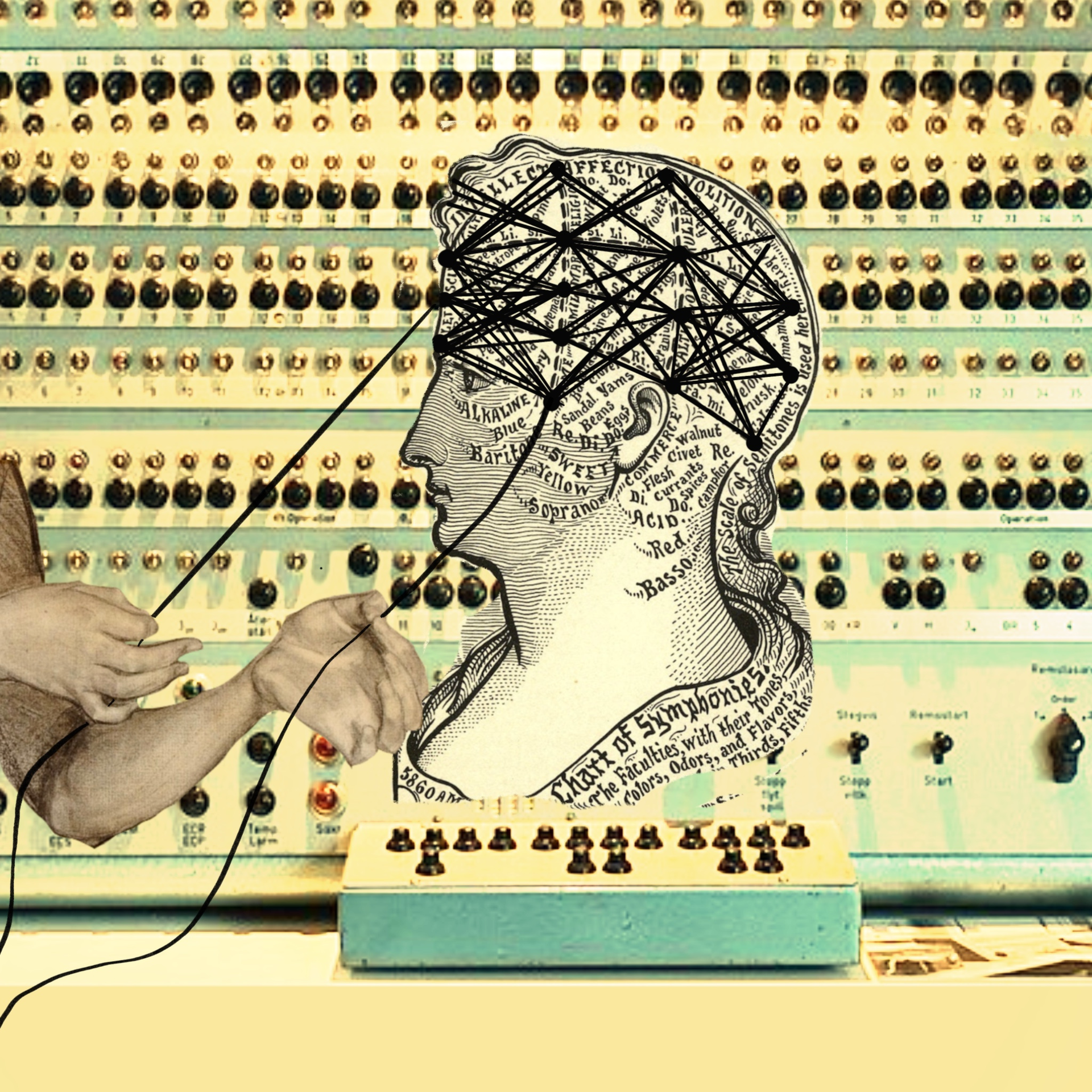
*Image: Hanna Barakat & Cambridge Diversity Fund / https://betterimagesofai.org / https://creativecommons.org/licenses/by/4.0/


Leave a Reply