First Philly AI Learning Exchange, 9.29.26
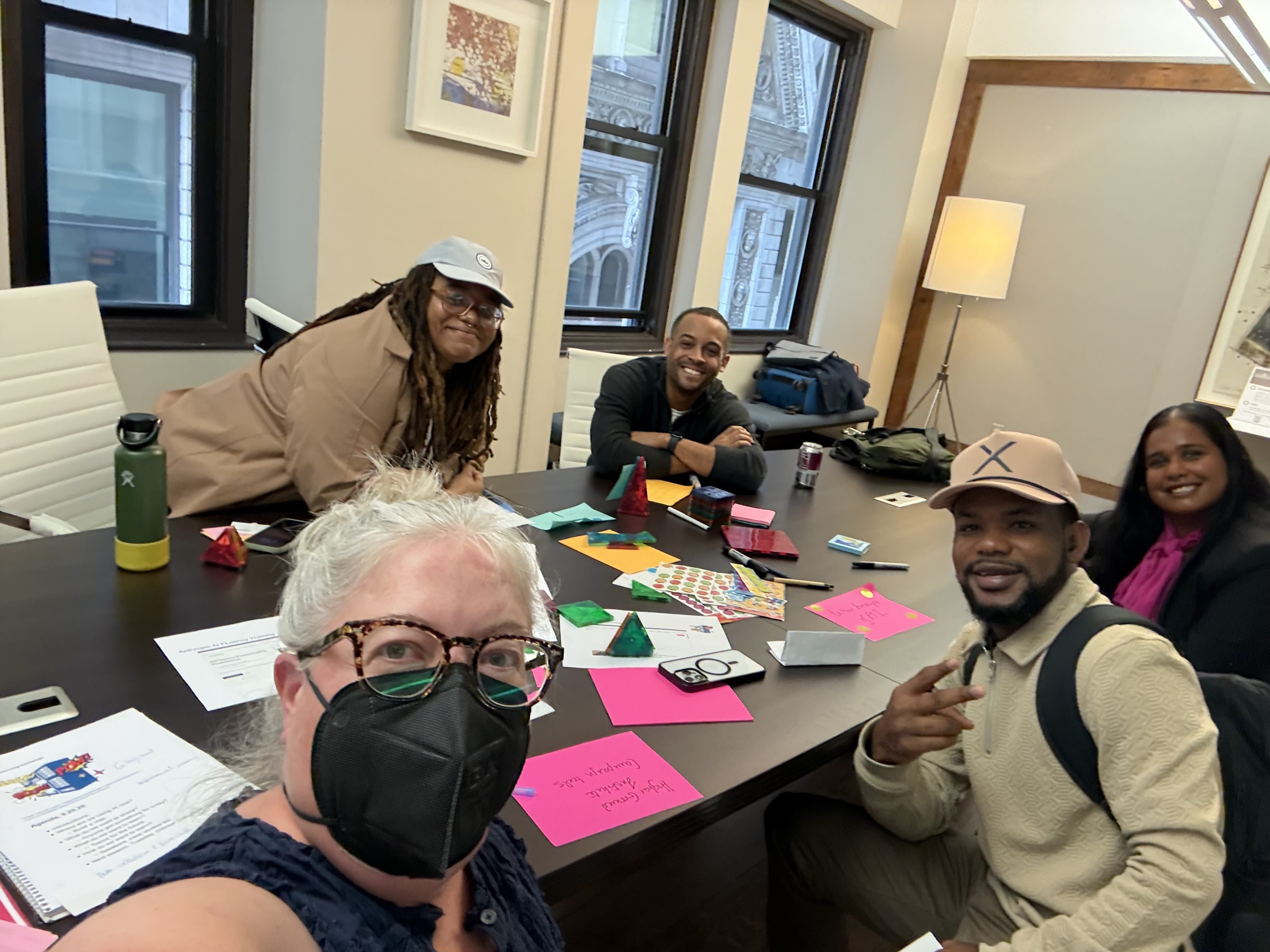
Our first session covered four main areas: working with data, building new tools, AI policy and governance, and using AI in everyday work. Participants shared practical examples alongside questions they are still working through.
1. Working with data and deciding who controls it
We discussed how AI can help present data in clear, accessible and useful ways. ChatGPT and similar tools can help organize information, create charts and explain findings for different audiences. Getting useful results still requires knowing what is in the dataset, giving clear instructions and being able to spot mistakes in what the AI produces. A polished presentation does not necessarily mean the information is correct.
We also asked whether AI can help decide what data to collect in the first place—for example, when gathering information from community members. Could it help develop questions or identify gaps? Where does it need the knowledge and judgment of people who understand the community and the purpose of the work? We left this as an open question.
Another possible use was preserving institutional memory. We talked about whether a chatbot could interview staff who are leaving after many years, helping capture their knowledge, experiences and the reasons behind past decisions.
This led to a broader discussion about communities collecting and controlling their own data. Could AI help communities gather the information that matters to them, keep it accessible and decide who can use it? The interest here was in giving communities more control over research about their lives, rather than having information extracted by outside researchers.
2. Jumping in and building new tools
Some participants are learning by building things and trying them out. One person described regularly using Codex to create tools, including an ordering app for his sister’s food business. OnHigherGround also came up as a way to develop new tools.
Another participant described drawing on her background in fintech to help small businesses use AI. These examples showed how people are bringing their existing skills and knowledge to new tools, starting with a practical need and exploring what they can make.
3. AI policy, ethics and governance
Several participants are working through questions about when AI use is appropriate in large organizations, and what policies should guide it. Higher education was one example, with discussion of MIT’s recent report on AI use on campus.
A participant described Rutgers’ position against using AI detection software because of equity concerns. This raised a further question: how should professors respond when they believe students are using AI? Avoiding detection software still leaves the work of setting expectations, discussing acceptable uses and deciding how to assess students’ learning.
One participant is interested in moving professionally into AI ethics and governance, potentially through a master’s degree in the European Union. The EU’s approach to AI governance and ethics was part of the attraction.
4. Using AI in everyday work—and finding a balance
Everyone at the session was regularly using ChatGPT, Claude or similar models and finding them helpful. Examples included developing project outlines, designing workshops, summarizing research, preparing presentations and using AI as a thought partner.
One participant described a workplace where AI use is widespread and openly accepted. People do not feel they need to hide it or feel ashamed of using it. But that openness has brought another concern: whether people are becoming too reliant on it.
We discussed where the balance might lie. When does AI help people develop their thinking, and when might it replace thinking they need to do themselves? How can people benefit from these tools while continuing to exercise their own judgment and build their skills? These remain questions to explore as AI becomes part of everyday working life.
Resources
- Better Images of AI, https://betterimagesofai.org/
- MIT Report on AI in education, https://aiandeducation.mit.edu/report/
- Swiss public model Apertus, https://www.apertus-ai.org/
- Anthropic AI Fluency & Frameworks training, https://academy.claude.com/courses/ai-fluency-framework-foundations

